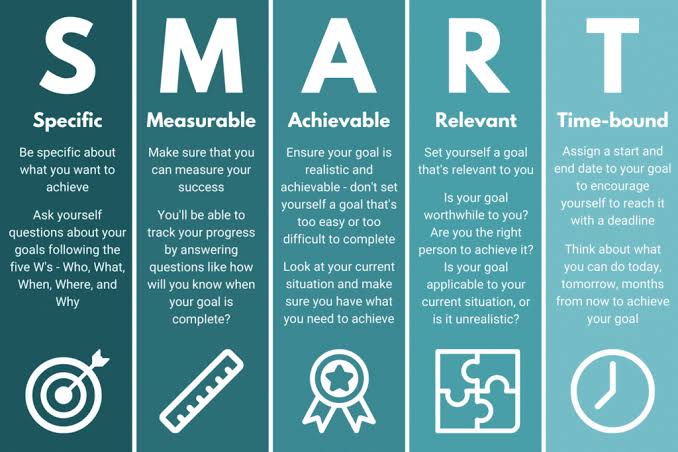
What Are SMART Sales Goals?
SMART sales goals are targets defined by five criteria: Specific, Measurable, Achievable, Relevant, and Time-bound. Instead of telling a rep to “grow revenue,” a SMART goal states exactly what needs to happen, by when, and how progress will be tracked.
For field sales teams, SMART goals are especially important because reps operate independently across territories, often without daily oversight. Clear, structured goals replace ambiguity with direction, giving reps a concrete plan for each week in the field and giving managers a framework for coaching conversations.
The difference between a vague target and a SMART one is stark. “Increase sales” gives a rep nothing to act on. “Add 8 net-new accounts in the Mid-Atlantic territory by September 30, averaging 12 prospecting visits per week” tells them exactly what to do, where to do it, and when it needs to happen.
According to a Harvard Business Review study, teams that set specific, challenging goals outperform those with vague objectives by 20-25%. When those goals are paired with regular progress tracking, the effect compounds because reps can course-correct before falling too far behind.
Here are five actionable steps for building SMART sales goals that actually drive field sales performance.
Step 1: Start With Territory Data, Not Gut Feel
The biggest mistake field sales managers make when setting goals is starting with a top-down revenue number and dividing it equally across reps. This ignores the reality that territories are not created equal. A rep covering 200 accounts across rural Texas has fundamentally different capacity than one managing 80 accounts in metro Atlanta.
Before you set any targets, audit your territory data:
- Account count per rep: How many active and prospect accounts does each rep own?
- Revenue per account: What is the average deal size and annual value by territory?
- Visit frequency: How often are reps actually visiting their top accounts versus how often they should be?
- Coverage gaps: Which accounts have not been visited in 60, 90, or 120+ days?
- Win rates by territory: Are some territories converting at higher rates due to market fit rather than rep performance?
A Salesforce State of Sales report found that high-performing sales teams are 1.5x more likely to base forecasts on data-driven insights rather than intuition. Territory data gives you the baseline to set goals that are ambitious but achievable, which is the “A” in SMART that most managers get wrong.
With a platform like Map My Customers, you can pull territory performance data directly from your CRM, visualize account density on a map, and identify coverage gaps instantly. This turns goal-setting from a spreadsheet exercise into a strategic conversation grounded in what is actually happening in each territory.
Step 2: Set Layered Goals - Outcome, Activity, and Efficiency
Revenue targets alone are not enough for field sales teams. Revenue is a lagging indicator: by the time you see a number miss at month-end, it is too late to fix it. SMART goals for field sales need three layers.
Outcome Goals
These are the results you are ultimately driving toward. Examples include:
- Close $180,000 in new business in Q3
- Add 12 net-new accounts by December 31
- Grow existing account revenue by 10% year-over-year in the Southeast region
Activity Goals
These are the daily and weekly actions reps control directly. Activity goals act as leading indicators of outcome goals. Examples include:
- Complete 10 face-to-face customer visits per week
- Conduct 3 product demos per week
- Log 5 new prospect meetings per month
Research from The Bridge Group shows that the average outside sales rep makes 5.8 face-to-face visits per day. If your team is well below that benchmark, activity goals provide a clear lever for improvement.
Efficiency Goals
These are unique to field sales and relate to how effectively reps use their time on the road. Examples include:
- Reduce average drive time between visits by 15 minutes
- Increase customer-facing time from 35% to 45% of total work hours
- Eliminate territory overlap between adjacent reps
Each layer gives reps a different lever to pull. If a rep is hitting activity goals but missing outcomes, the issue is likely deal quality or account selection, not effort. If a rep is missing activity goals, the conversation shifts to time management and route planning. This layered approach makes coaching conversations far more productive than asking “Why did you miss your number?”
Step 3: Build Frequency Plans for Every Account Tier
One of the most powerful applications of SMART goals in field sales is frequency management: setting specific visit cadences for each tier of account in a rep’s territory. Without a frequency plan, reps default to visiting the accounts they enjoy, which are not always the accounts with the highest revenue potential.
Frequency management is the practice of assigning a target visit cadence to each account based on its value, potential, and stage in the sales cycle. It ensures reps allocate their limited field time to the accounts that matter most.
A practical tiering model looks like this:
| Account Tier | Criteria | Visit Frequency | SMART Goal Example |
|---|---|---|---|
| Tier 1 (Top 20%) | Highest revenue, strategic accounts | Every 2 weeks | ”Visit all 15 Tier 1 accounts at least twice per month” |
| Tier 2 (Next 30%) | Growth potential, mid-revenue | Monthly | ”Complete monthly check-ins with all 25 Tier 2 accounts” |
| Tier 3 (Remaining 50%) | Maintenance, lower potential | Quarterly | ”Touch all Tier 3 accounts at least once per quarter” |
| Prospects | New business targets | As pipeline dictates | ”Make first contact with 8 new prospects per month” |
Map My Customers’ frequency management feature lets managers set these cadences at the account level and track whether reps are hitting them. The platform flags overdue accounts automatically, so reps always know where they are falling behind on their visit goals. This turns a SMART goal like “visit Tier 1 accounts biweekly” from a number on a spreadsheet into a visible, actionable target in the field.
According to CSO Insights, sales teams that enforce structured call planning see 15-20% higher quota attainment than those that leave visit planning to individual reps. Frequency management is the structural backbone that makes this possible.
Step 4: Make Goals Visible With Real-Time Dashboards
A SMART goal that lives in a quarterly planning document and surfaces again at the month-end review is not a SMART goal. It is a wish. For goals to drive daily behavior, reps need to see their progress constantly, not just when a manager asks for an update.
Effective field sales dashboards should surface:
- Activity completion rates: visits completed versus target, demos conducted, new contacts added
- Pipeline movement: deals advancing through stages, stalled opportunities, at-risk accounts
- Territory coverage: a visual map showing which accounts have been visited recently and which are overdue
- Trend lines: weekly and monthly performance trends so reps can spot patterns early
Gartner research indicates that sales teams using real-time analytics are 33% more likely to make data-driven decisions that improve performance. The key word is “real-time.” Month-end reports tell you what happened. Daily dashboards tell you what to do about it.
Map My Customers provides dashboard views that show activity against targets at both the rep and team level. Managers can see at a glance which reps are ahead on their visit goals and which need support, without waiting for a report or asking for a status update. For reps, the dashboard acts as a daily scoreboard that creates healthy accountability.
The psychological impact matters too. When a rep can see they are at 7 of their 10 weekly visits by Wednesday afternoon, they know exactly where they stand. That visibility transforms a goal from something abstract into something they are actively chasing.
Step 5: Review, Adjust, and Reset on a Regular Cadence
The “Time-bound” element of SMART goals is not just about setting a deadline. It is about building a review rhythm that keeps goals relevant as conditions change. Markets shift. Territories get rebalanced. New products launch. A goal set in January may need to be recalibrated by April.
Monthly One-on-Ones
Use monthly reviews to focus on:
- Progress against activity and outcome targets
- Which accounts are responding well and which are not
- Obstacles the rep is facing (travel logistics, product gaps, competitive pressure)
- Adjustments to weekly activity targets if the rep is on track for early achievement or falling behind
Quarterly Planning Sessions
Use quarterly reviews to step back and evaluate whether the goals themselves are still right:
- Has the territory composition changed due to new accounts, lost accounts, or boundary adjustments?
- Are the frequency tiers still appropriate, or should certain accounts be promoted or demoted?
- Are efficiency goals being met, and is there an opportunity to reclaim more selling time?
- What did the data reveal that was not obvious at the start of the quarter?
Annual Goal Architecture
At the annual level, connect individual rep SMART goals to team and company objectives. Each rep’s goals should roll up into territory-level targets, which roll up into regional goals, which connect to the company revenue plan. This alignment ensures that when every rep hits their SMART goals, the team hits its number.
Map My Customers’ territory management capabilities make this cascading alignment easier by giving managers a visual overview of how goals and performance are distributed across the map. When you can see that the Northeast is ahead of target but the Southwest is lagging, you can rebalance resources and adjust goals before the quarter ends.
Putting It All Together
Setting SMART sales goals for a field sales team is not about downloading a template and filling in numbers. It is about building a system where territory data informs the targets, activity and efficiency goals give reps daily direction, frequency plans ensure the right accounts get the right attention, dashboards make progress visible, and regular reviews keep everything calibrated.
The five steps work together as a cycle:
- Analyze your territory data to set baselines
- Define layered goals across outcomes, activities, and efficiency
- Assign frequency plans to ensure strategic account coverage
- Track progress with real-time dashboards
- Review and adjust on a monthly and quarterly rhythm
When field sales managers follow this framework, goals stop being arbitrary targets handed down from leadership and start being practical tools that help reps win in their territories every day.
Frequently Asked Questions
What are SMART sales goals?
SMART sales goals are targets defined by five criteria: Specific, Measurable, Achievable, Relevant, and Time-bound. For field sales, this means setting goals tied to specific territories, tracked through activity and revenue metrics, grounded in territory data, aligned to company objectives, and bound to clear deadlines.
How do SMART goals differ for field sales versus inside sales?
Field sales SMART goals must account for geography, travel time, and face-to-face visit capacity. Inside sales reps can measure calls and emails per hour, but field reps need goals around territory coverage, visit frequency by account tier, and route efficiency, all of which are unique to outside sales.
What is the most common mistake when setting field sales goals?
Setting revenue targets without corresponding activity and efficiency goals. Revenue is a lagging indicator. By the time you see a miss, the quarter is often too far gone to recover. Layering activity goals (visits, demos) and efficiency goals (drive time, coverage) gives reps and managers leading indicators they can act on weekly.
How does frequency management improve goal attainment?
Frequency management ensures reps visit high-value accounts at the right cadence instead of defaulting to comfortable, familiar stops. Teams that enforce structured visit planning see 15-20% higher quota attainment because reps spend their limited field time where the revenue opportunity is greatest.
Ready to set SMART goals your field sales team can actually execute? Book a demo to see how Map My Customers helps managers set territory-based targets, track rep activity in real time, and keep every account on the right visit cadence.