
What is Sales Accountability Exactly?
Sales accountability encompasses both the “how” and “what” of sales management. It represents how managers align with teams regarding expectations and sales objectives, while enabling representatives to own their activities, efforts, and performance. Rather than focusing solely on negative consequences, accountability should recognize successes equally. When teams feel responsible for results, they’re motivated to perform. Strong accountability across departments drives effectiveness, goal attainment, and operational fluidity.
How To Start Holding Your Sales Team Accountable
1. Set and Communicate Clear Expectations and Goals
Salespeople require explicit, consistent instructions about their accountability measures. Clarity and consistency maintain motivation across the department. Establish both individual and team expectations to ensure alignment. Set specific sales goals to create buy-in and foster healthy competition.
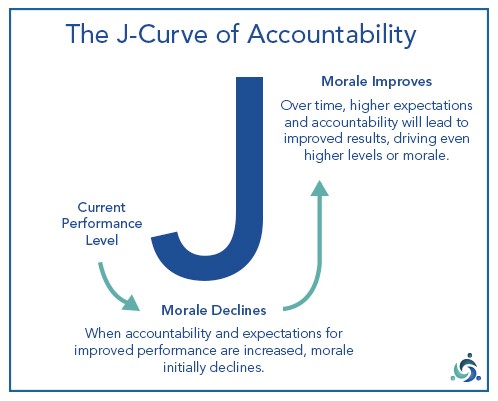
Peter Stark’s “J-Curve of Accountability” demonstrates that while initial implementation may present challenges, the long-term benefits justify upfront alignment efforts.
“The first rule of goal achievement is having some in the first place. At the beginning of each reporting period, be sure to document and communicate the goals that the rep must achieve.” — Eliot Burdett, CEO at Peak Sales Recruiting
2. Have Specific Consequences and Rewards Based on Those Expectations
With clear expectations established, goal achievement becomes non-negotiable. Onboarding new representatives costs approximately three times their annual salary. However, companies often fall victim to sunk-cost fallacy, reluctant to terminate underperforming employees despite investment. This creates “social loafing,” where team members disengage when witnessing peers avoiding accountability.
Termination shouldn’t loom threateningly, but consistent underperformance requires decisive action. Simultaneously, recognize successes to prevent demoralization and complacency.
“The real company values, as opposed to the nice-sounding values, are shown by who gets rewarded, promoted, or let go.” — Reed Hastings, CEO of Netflix
Weekly wins deserve modest rewards such as lunches or car washes. Monthly achievements warrant larger recognition like preferred parking, bonuses, or event tickets. Collaborate with teams to establish realistic incentives or light-hearted consequences. Consider that public recognition may embarrass some performers and adjust recognition methods accordingly.
3. Track Performance and Sales Activity With Transparency
Approximately 55% of salespeople prefer competitive environments. Leverage this tendency by making sales numbers and activities completely visible. Display leaderboards and performance graphs prominently in offices and on mobile devices.
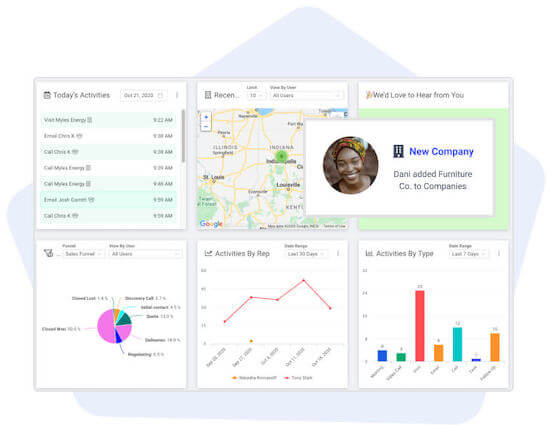
Map My Customers’ Weekly Scorecard delivers customized performance summaries directly to managers’ inboxes every Monday, highlighting activities, new companies, and pipeline creation. The Team Leaderboard identifies high performers and coaching opportunities.
“If you can afford to buy a billboard in Times Square or a Ticker on CNN that scrolls your sales rep’s performance in real-time, do you think they’d be more likely to pick up the phone?” — Peter Caputa IV, CEO of Databox
Americans spend over 5 hours daily on phones — ensure numbers are accessible there. Real-time tracking allows managers to monitor team efforts, make proactive adjustments, and maintain accountability. Representatives must consistently track activities and document customer interactions. Accurate data enables proper performance assessment.
4. Make Sure You Enable Your Team to Be Successful
Managers should provide representatives with tools and minimal obstacles to succeed. Begin with thorough onboarding, utilizing shadowing with top performers, role-playing, and interactive training materials. Provide effective sales technology that reduces workload and enables accountability.
Cadence management proves critical — timely follow-ups after meetings significantly impact outcomes. Tools that automate follow-ups or remind teams to contact prospects drive accountability and task focus.
“Different salespeople are motivated in different ways. Some people are motivated by team-wide sales contests. Some are driven by quota achievement. Some are motivated by qualitative improvements.” — Dan Tyre, HubSpot
5. Utilize Recurring Team Meetings to Discuss Wins and Losses
Regular feedback and public progress recognition are essential. Hold team meetings where members share successes and failures, discussing resolutions and lessons learned. This approach allows teams to learn from others’ mistakes without personal experience.
“Encouraging your sales team to share their successes/strategy with their team members and have them answer questions regarding a recent win creates a high level of team spirit and healthy competition.” — Jason Shuttleworth, Woodland Group Ltd
Teams must feel safe discussing mistakes without fearing retaliation from leadership. Open dialogue about failures prevents larger, sustained problems.
6. Hold One-On-One Meetings With Your Reps
Companies with high employee engagement demonstrate 21% greater productivity than lower-engagement counterparts. When salespeople feel heard, they perceive greater value and accountability.
Schedule consistent, present, and prepared one-on-one meetings. Discover individual motivation factors and help overcome specific challenges. Utilize tracked activities and insights to inform conversations about pipeline status and prospect strategies.
“This is valuable time that can be used to get to know your team members, understand their individual strengths and weaknesses, and give them guidance on how to advance their careers.” — Colin Nanka, Senior Director at Salesforce
Offering individual guidance reduces representatives’ ability to avoid responsibility when goals aren’t met.
7. Complement Accountability With Motivation
Motivation strengthens accountability enforcement. Share compelling team stories emotionally and excitingly. Sales Kickoff events serve this purpose well. During slower periods, tell competitive stories adapted to unique circumstances, or use inspiring content from movies, podcasts, or motivational playlists.
Recognition shouldn’t feel like assignments or lectures — it’s about creating excitement. Understanding what motivates each team member (fiscal rewards, self-improvement, altruistic purposes) proves essential.
“Be direct and ask them, ‘What would motivate you?’ You may be surprised at their answers. And remember, not everyone feels motivated by the same things.” — Sujan Patel, co-founder of Web Profits
8. Hold Yourself Accountable
According to an accountability study, 91% of people rank accountability as a top desired organizational development need. Sales teams want managers equally accountable.
Managers must publicly answer for their teams’ performance, taking proportional blame for failures while sharing credit for successes. Show salespeople you’re genuinely part of the team, willing to assume responsibility during difficulties.
“A good leader is a person who takes a little more than his share of the blame and a little less than his share of the credit.” — John Maxwell, Author/Speaker
Top Templates to Use to Increase Sales Accountability
Weekly Sales Activity Tracker Excel Template
Smartsheet offers a free customizable template tracking weekly and monthly sales activities by representative, providing weekly and monthly totals of all activities.
Daily Sales Goal Tracking Template
Template.net provides a Daily Sales Tracking format enabling representatives to visualize goals and track daily performance against objectives, supporting individual and team performance monitoring.
Utilize Software to Help Keep Your Team Accountable
CRMs (Best for entire sales teams)
HubSpot Sales Hub centralizes customer and sales data while enabling activity and goal tracking, supporting relationship deepening and faster deal closure.
Salesforce Sales Cloud offers cloud-based customization fitting diverse team needs, organizing information, tracking communications, optimizing processes, and leveraging AI-powered tools.
Call Tracking Software (Best for inside sales)
Gong automatically records, stores, and analyzes sales conversations using AI-powered insights identifying opportunities through keyword analysis.
Outreach provides automated sales activity tracking, enhanced accountability, and optimized communication strategies through multi-channel communications and live call coaching.
Field Sales Software (Best for outside sales teams)
Map My Customers offers mobile-first software with visual dashboards, automation, data organization, tracking, visualization, and mapping directly accessible from mobile or desktop.
Geopointe transforms Salesforce data geographically, supporting territory mapping, effort tracking, and process streamlining through advanced visualization and filtering.
Start Taking Action on Holding Your Team Accountable to Elevate Success
Following these steps enables managers to increase accountability and optimize team sales effectiveness. Establish clear goals, define consequences and rewards, maintain transparency, enable success through proper tools and training, conduct regular meetings, provide individual coaching, motivate consistently, and model accountability yourself. Track activities to identify successes and inefficiencies. Begin implementing these strategies today.