
Average Sales Turnover Rates: Preventing Attrition in Outside Sales
Outside sales representatives demonstrate remarkable career longevity, with the average rep having nearly 19 years of experience in sales. This article explores turnover dynamics in the sales industry, compares outside sales to inside sales roles, and examines the business impact of employee attrition.
What Is Sales Turnover?
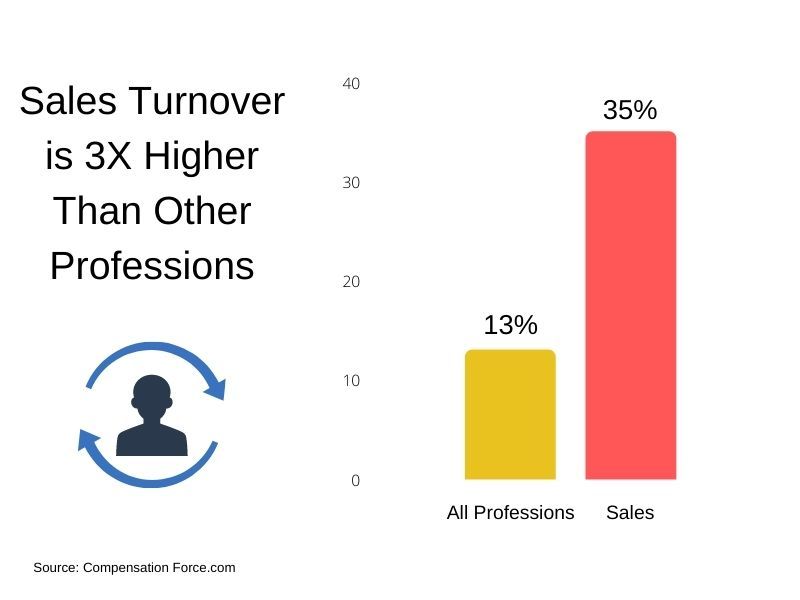
Sales turnover refers to employee attrition when sales professionals voluntarily leave their positions. While some churn is normal, the sales industry experiences disproportionately high attrition compared to other sectors. The average sales turnover rate has been reported as high as 35%, while the average turnover rate for all professions is about 13%. This means the sales industry experiences turnover three times higher than average professions.
Sales turnover refers to the rate at which sales professionals voluntarily leave their positions over a given period. It is measured by dividing the number of reps who departed by the average headcount during that period, then multiplying by 100.
Key stat: Sales turnover runs as high as 35% - nearly three times the 13% average across all professions.
Tenure of Outside Sales Versus Inside Sales
Outside sales representatives demonstrate stronger tenure retention than their inside sales counterparts. According to Map My Customers’ Annual Field Sales Benchmark Report, outside reps have averaged 4.8 years at their current company and approximately 19 years of total sales experience.
Key stat: The average outside sales rep has 4.8 years of tenure at their current company and roughly 19 years of total sales experience - far outpacing inside sales retention.
Outside Sales Rep Demographics
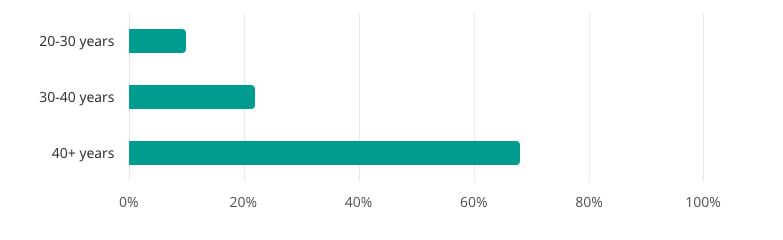
The United States has over 1.03 million active outside sales representatives. Key demographic characteristics include:
- Age: The average age exceeds 40 years old, representing 68% of the population
- Youth representation: Only 10% are between ages 20-30
- Gender: Approximately 70% male, 30% female
- Compensation: Average annual salary of $59,642, with top earners reaching $83,000+
Key stat: 68% of U.S. outside sales reps are over 40. Only 10% are between ages 20-30, reflecting the experience-heavy nature of field sales careers.
Why Outside Sales Reps Stay in Their Roles Longer
Three primary factors contribute to extended tenure:
1. Product Expertise
Long-term reps develop deep specialized knowledge about company products, enabling confident customer conversations about features and competitive advantages. This expertise becomes a significant asset that reps are reluctant to leave behind.
2. Customer Relationships

Outside sales professionals cultivate lasting relationships with clients through repeated interactions and personal connections. These relationships take years to build and represent significant personal and professional value.
3. Autonomy Appeal
The profession attracts individuals who value freedom and independence. High performers receive increased autonomy and reduced oversight, making the role increasingly attractive over time.
Pros and Cons of Long Sales Rep Tenure for the Business
Advantages
- Valuable institutional knowledge
- Strong established customer relationships
- Intimate understanding of customer preferences
- Knowledge of customer decision-making processes
- Product expertise and use case mastery
- Experience overcoming common objections
Disadvantages
- Greater resistance to oversight and management
- Long tenure doesn’t guarantee high performance
- Potentially higher base salary costs
- Reduced openness to coaching and training
- Institutional knowledge concentrated in individuals rather than shared systems
The COVID-19 pandemic highlighted the value of experienced reps. One surveyed respondent noted: “It was difficult for new reps to meet with customers because they had no prior relationships…Luckily for me, I had years of relationships to back me up.”
Why High Sales Attrition Is Bad for Business
The financial consequences of losing salespeople are substantial. U.S. firms spend $15 billion a year training salespeople and another $800 billion on incentives. Additional costs include:
Key stat: U.S. companies spend $15 billion per year training salespeople. High turnover means that investment walks out the door - repeatedly.
- Extended recruitment timelines to fill vacant positions
- Manager time diverted from strategic activities to recruiting
- Lost revenue during unfilled position periods
- Training and onboarding expenses before reps generate sales
- Potential lost client relationships
How to Calculate Your Sales Turnover Ratio

Calculate turnover by dividing the number of reps departing during a specific period by the average number of employees in the department during that same timeframe. Regular measurement — monthly, quarterly, or annually — enables trend analysis and industry comparison.
Formula:
Sales Turnover Rate = (Number of Reps Who Left / Average Number of Reps) x 100
How to Prevent Attrition in Outside Sales

Set Achievable Goals
Establish challenging but attainable quotas to prevent discouragement. Unrealistic targets are one of the fastest paths to burnout and resignation.
Professional Development
Provide advancement opportunities, increased responsibility, and new challenges aligned with rep motivation. Reps who see a growth path are far more likely to stay.
Sales Competitions
Gamification and contests can transform isolated work into exciting, team-building activities. Healthy competition keeps reps engaged and motivated.
Equip Your Team
Invest in modern sales technology and software that enhance productivity and efficiency. Reps who feel supported with the right tools are more satisfied in their roles.
Take Proactive Steps to Retain Your Talent
Understanding and monitoring sales turnover rates provides insights into attrition causes. This knowledge enables proactive measures to support and motivate experienced outside sales professionals. During challenging business periods, retaining tenured reps with strong relationships and proven resilience strengthens overall sales department stability.