
Data visualization and location intelligence have become essential for modern field sales teams. Whether your reps are knocking on residential doors or visiting B2B accounts across a multi-state territory, the right software helps them understand where to focus, which accounts to prioritize, and how to spend more time selling instead of planning routes, updating spreadsheets, or searching for new leads.
The stakes are high. According to industry research, field sales reps spend less than 35% of their time actually selling. The rest goes to administrative tasks, driving, and manual planning. Choosing the right platform can mean the difference between a team that consistently hits quota and one that wastes hours on low-value tasks every week.
Spotio is one of the more well-known tools in this space, particularly among door-to-door and canvassing sales teams. It has built a solid reputation in the B2C field sales world, but is it the right fit for your organization? And how does it stack up against alternatives designed for different types of selling?
In this comprehensive review, we break down everything you need to know about Spotio: its features, pricing structure, CRM integrations, pros, cons, and the best alternatives so you can make an informed decision for your team.
What is Spotio?
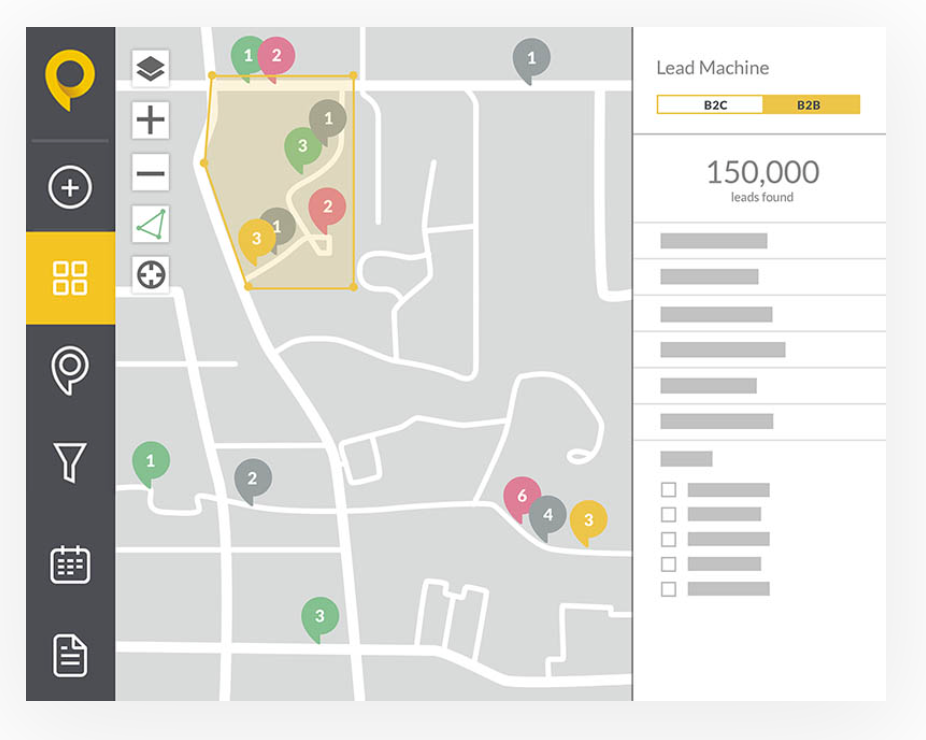
Spotio is a sales engagement and mapping software designed primarily for door-to-door sales teams. Founded in 2014, Spotio has built its platform around the specific needs of businesses that sell directly to consumers, particularly those canvassing residential neighborhoods. Think solar panel installers going door to door, pest control companies working subdivision by subdivision, or home improvement contractors targeting homeowners in storm-damaged areas.
The platform combines territory mapping with activity tracking to help reps manage their daily workflows and help managers monitor team performance. At its core, Spotio aims to bring structure and visibility to field sales operations that have traditionally relied on pen-and-paper tracking, spreadsheets, and guesswork.
For teams doing high-volume, short-cycle B2C selling, Spotio replaces the clipboard and paper map with a digital system that captures data at every touchpoint. This makes it easier for managers to understand what is happening in the field and for reps to stay organized throughout a busy day of canvassing.
Key Features
Spotio offers a range of features built around the door-to-door sales workflow:
- Territory mapping to define and visualize sales areas
- Activity tracking for logging daily field activities
- Reporting dashboards for managers to monitor team performance
- Autoplays for sequencing outreach activities
- Prospecting tools for identifying potential leads in a given area
- Visual pipeline for tracking deal progress
- GPS-based door knock logging that records where reps have visited
- Stored sales presentations for consistent messaging
- Sales routing to help reps plan their daily routes
For Sales Reps
Spotio helps individual reps automate manual tasks that eat into selling time. By eliminating unqualified leads and highlighting high-conversion areas through data overlays, reps can focus their energy on prospects most likely to buy. The GPS-based logging also means reps do not have to manually record every stop, reducing the administrative burden at the end of each day.
Reps can access stored sales presentations directly from the app, ensuring consistent messaging across the team. The prospecting tools also let reps identify new potential customers within their assigned territory based on demographic and housing data, which is particularly valuable for door-to-door teams that need to maximize the value of every hour in the field.
For Sales Leaders
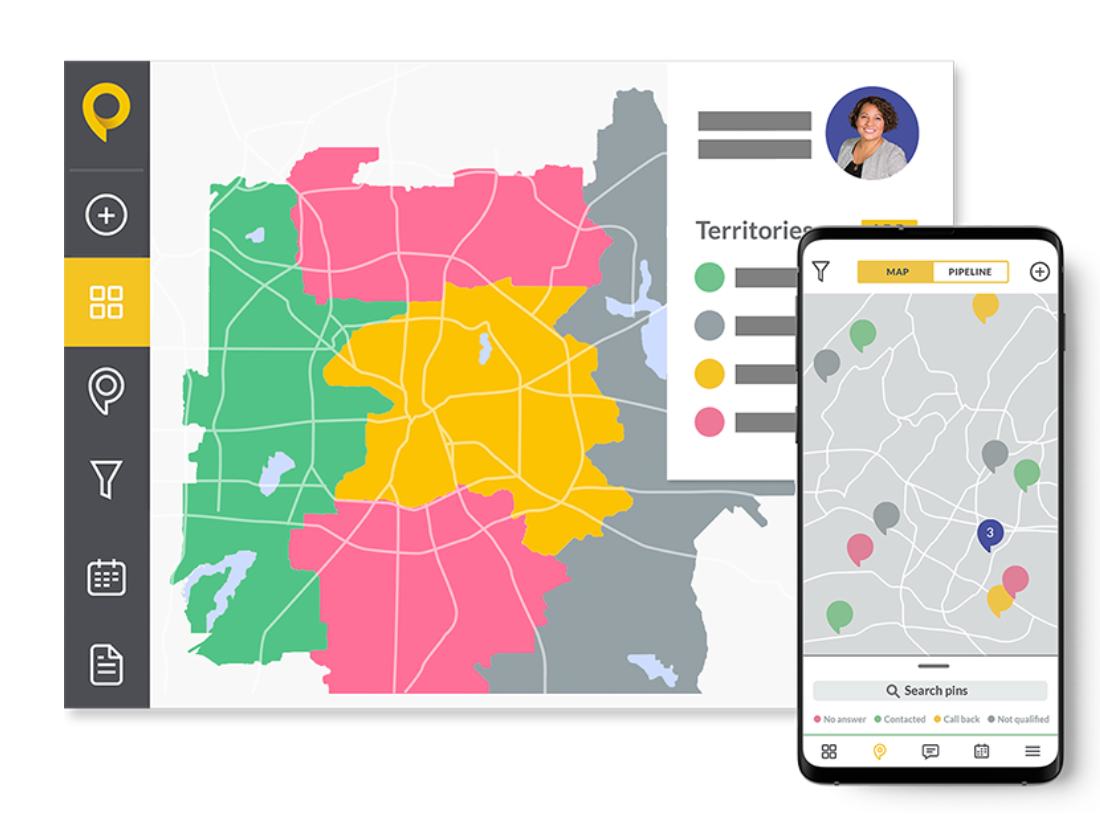
Sales managers and directors get a bird’s-eye view of their teams and territories through color-coded maps. This makes it easier to identify coverage gaps, monitor rep activity in real time, and ensure that territories are being worked effectively. The reporting dashboards give leaders insight into key metrics like doors knocked, appointments set, and deals closed across the team.
Autoplays allow managers to set up sequenced outreach workflows so that reps follow a consistent process from first contact through close. This adds a layer of process discipline that helps newer reps ramp up faster and ensures that no prospect falls through the cracks.
Integrations
Spotio integrates with major CRMs through a combination of native integrations, an open API, and Zapier connections. The depth of integration varies depending on which CRM you use, and some connections require third-party tools to function properly. This is an important consideration for teams that rely heavily on their CRM as the system of record, since incomplete data sync can create manual work and data quality issues.
Target Industries
Spotio is most commonly used in industries with a strong door-to-door or canvassing component:
- Solar - reps canvassing neighborhoods to pitch solar panel installations
- Telecom - teams selling cable, internet, and phone packages door to door
- Home Improvement - contractors targeting homeowners for renovation projects
- Storm Restoration - roofing and restoration companies working damaged neighborhoods
- Alarm and Security - reps selling home security systems residentially
- Pest Control - service teams working subdivisions and communities
If your business falls into one of these categories and your primary selling motion is B2C door-to-door, Spotio is worth evaluating. If your team primarily sells B2B with longer sales cycles and multi-touch account relationships, you may find Spotio’s feature set limiting.
Spotio Pricing
Spotio offers four pricing tiers, all billed annually:
- TEAM: $39/user/month
- BUSINESS: $69/user/month
- PRO: $129/user/month
- ENTERPRISE: Contact for pricing
Monthly billing is no longer offered, so teams must commit to an annual contract. Implementation fees vary depending on team size and configuration complexity, so be sure to ask about total cost of ownership during the sales process.
Each tier unlocks additional features, with the lower tiers covering basic mapping and activity tracking while higher tiers include advanced reporting, integrations, and team management capabilities.
It is worth noting that Spotio’s pricing can add up quickly for larger teams, especially when you factor in implementation fees and the potential need for additional subscriptions (like Zapier) to connect your CRM. Before signing a contract, make sure you understand the total cost including all add-ons and required integrations.
Spotio CRM Integrations
Spotio connects with several popular CRM platforms:
- HubSpot
- Salesforce
- Zoho
- Microsoft Dynamics
The integration method varies by CRM. Some platforms connect natively, while others require Zapier or the open API. It is worth noting that HubSpot and Zoho users typically need a separate Zapier subscription to connect their CRM with Spotio, which adds to the overall cost and introduces another tool into your tech stack.
For teams that depend on their CRM as the single source of truth, integration quality matters enormously. Incomplete syncs, delayed data, or one-way connections can erode trust in the data and cause reps to revert to manual tracking. When evaluating Spotio, test the integration with your specific CRM thoroughly before committing to an annual contract.
Pros of Spotio
Spotio has earned a following among door-to-door sales teams for several good reasons:
- Straightforward and user-friendly interface that reps can learn quickly without extensive training
- Household data including homeownership status, owner age, and credit capacity to help reps qualify leads before knocking
- Real-time GPS-logged door knocks with visual deal representations on the map, so managers can see exactly where reps have been
- Real-time activity and performance visualization that gives managers instant insight into team productivity
- Organized customer and prospect activity sequencing through Autoplays, helping reps follow consistent outreach cadences
- Detailed pipeline tracking to monitor deals from first contact through close
- Mobile-friendly application that works well in the field, where reps spend most of their time
Cons of Spotio
Despite its strengths in the B2C door-to-door space, Spotio has notable limitations:
- Designed primarily for door-to-door B2C sales, which limits its applicability for B2B field sales teams with longer sales cycles and more complex account relationships
- Fewer sales team and territory management capabilities compared to competitors built for managing distributed field teams
- Lacks verified check-in reports, making it harder for managers to confirm that reps are actually visiting accounts rather than just logging activity
- Limited customization of dashboards, mapping, and fields, which can frustrate teams that need workflows tailored to their specific sales process
- Reports of dropped pins overlapping when accounts or leads are in close proximity, making it difficult to distinguish between locations in dense areas
- No auto-population of certain data fields, requiring reps to manually enter information that other platforms pull in automatically
- Less in-depth reporting than alternatives, particularly for teams that need granular analytics to coach reps and forecast accurately
- Some functions unavailable or problematic offline, which is a concern for reps who work in areas with spotty cell coverage
- HubSpot and Zoho users need separate Zapier subscriptions for CRM integration, adding complexity and cost to the tech stack
Alternatives to Spotio
If Spotio does not check all the boxes for your team, several alternatives serve the field sales market with different strengths and approaches. The best choice depends on your selling motion (B2B vs. B2C), team size, CRM requirements, and the level of management visibility you need. Here is a closer look at the top options.
Map My Customers
Best for: B2B outside sales teams that need a complete field sales platform connecting reps, managers, and leadership.
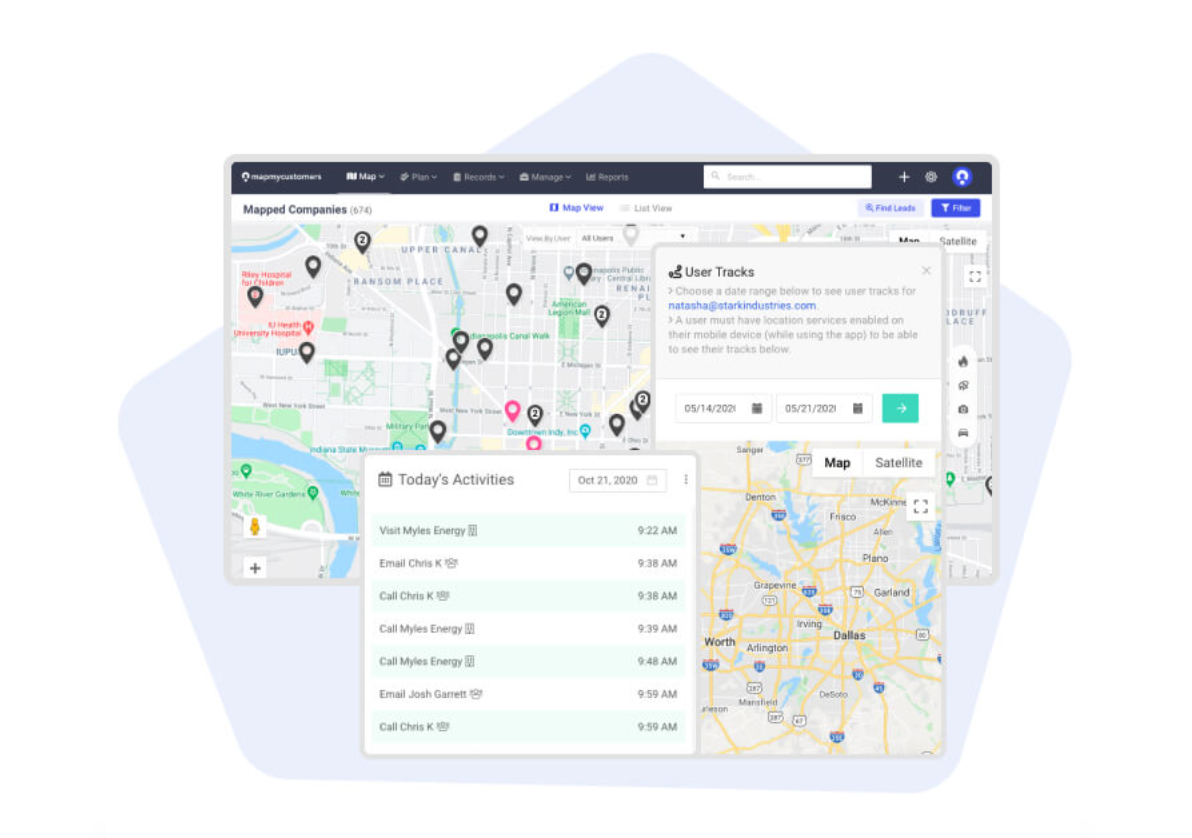
Map My Customers is built from the ground up for B2B field sales teams. Rather than focusing narrowly on activity tracking, it provides a full sales enablement platform with map visualization, route optimization, pipeline management, and team-level analytics. Where Spotio helps reps log door knocks, Map My Customers helps entire sales organizations manage complex account relationships, enforce visit cadences, and tie field activity directly to revenue outcomes.
Key Features:
- Map visualization with dynamic filters and performance layers
- Multi-stop route planning with Smart Planner that prioritizes accounts by value and urgency
- Automated check-ins with verified location data
- Lead Finder for discovering new prospects near existing accounts
- Smart Planner for intelligent daily route and account prioritization
- Visual dashboards with real-time team performance data
- Weekly Scorecard for tracking individual and team progress
- Pipeline metrics tied to field activity for accurate forecasting
Pricing:
- Personal: $60/month/user
- Team: $105/month/user
Integrations: Salesforce, HubSpot, Zoho, Microsoft Dynamics (native two-way sync, no Zapier required).
Map My Customers is the strongest alternative for B2B teams that need more than just a mapping tool. It is a platform that scales with your organization and ties every field activity back to pipeline and revenue data.
SalesRabbit
Best for: B2C door-to-door teams looking for a budget-friendly alternative to Spotio.
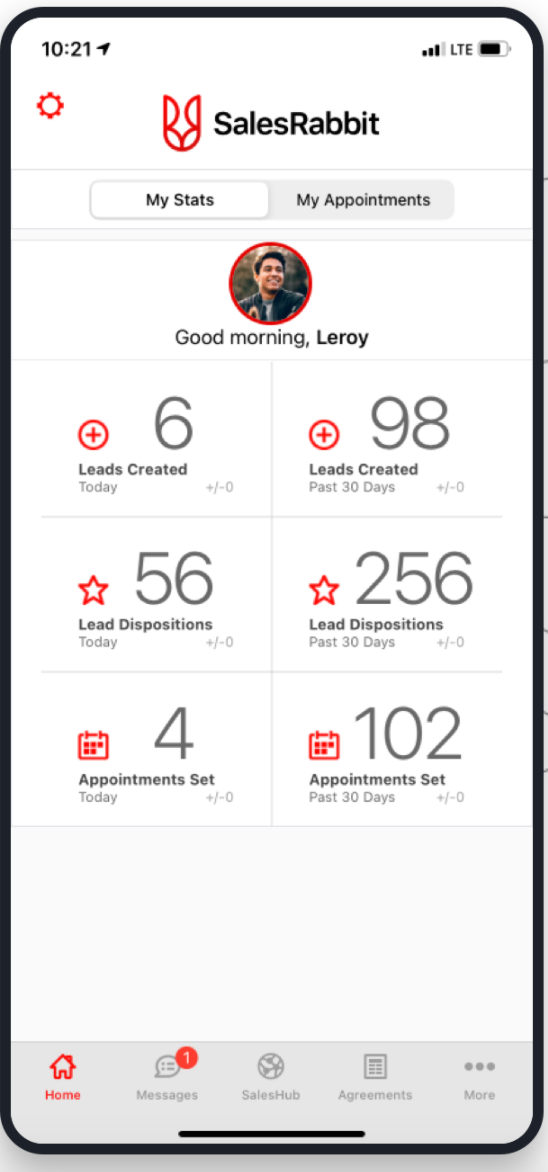
SalesRabbit occupies a similar space to Spotio, serving door-to-door and canvassing teams. It helps reps track which houses they have visited, monitor lead status, report on progress, and visualize data on a map.
Key Features:
- Track visited houses and log door knock outcomes
- Monitor leads through the sales process
- Report on rep and team progress
- Visualize canvassing data on maps with color-coded pins
Pricing:
- Team: $25/month (billed annually)
- Pro: $35/month (billed annually)
- Enterprise: $59/month (billed annually)
Integrations: Various CRM and business tools.
Geopointe
Best for: Budget-conscious teams that want to layer location intelligence on top of their existing CRM.
Geopointe takes a CRM-centric approach, location-enabling data that already lives in your CRM and displaying it on a map. It is a good fit for teams that are happy with their CRM but want better geographic visualization and territory planning.
Key Features:
- Location-enables CRM data for map-based visualization
- Map visualization with filtering and layering
- Optional route planning add-on for field reps
- Territory management with geographic boundaries
Pricing:
- Annual: $55/month/user
- Enterprise: Contact for pricing
Integrations: Deep integration with Salesforce; other CRM support varies.
Mapsly
Best for: Mobile-first reps seeking lightweight mapping and territory management.
Mapsly provides a streamlined mapping experience with territory management and customizable map views. It is a lighter-weight option that works well for teams that primarily need geographic visualization without the full suite of sales enablement tools.
Key Features:
- Territory management with visual boundaries
- Customizable maps with multiple data layers
- Distance-based search for finding nearby accounts
- Mobile-friendly interface for field use
Pricing:
- Essential: $25/month
- Pro: $45/month
- Enterprise: $70/month
- 14-day free trial available
Integrations: Various CRM platforms through native and API connections.
Conclusion
Field sales teams need visualization and mapping software to operate efficiently and hit their numbers. The right platform depends on the type of selling your team does and the level of management visibility you need.
If your team is focused on B2C door-to-door sales with a canvassing model, Spotio offers a solid set of tools purpose-built for that workflow. The GPS-based door knock logging, household data, and straightforward interface make it a natural fit for solar, home improvement, and similar industries.
However, if your team sells B2B with longer sales cycles, complex account relationships, and a need for team-level analytics, a platform like Map My Customers is a better fit. It provides the pipeline visibility, CRM integration depth, route optimization, and coaching tools that B2B field sales leaders need to drive revenue growth.
For teams that fall somewhere in between, consider what matters most: budget, integration requirements, team size, and management reporting needs. A tool that costs less per seat but does not integrate well with your CRM or does not give managers the visibility they need will ultimately cost you more in lost productivity and missed opportunities.
Whatever you choose, make sure the platform aligns with your sales process, integrates cleanly with your CRM, and gives both reps and managers the visibility they need to succeed. The best field sales software is the one your team will actually use every day, and that starts with choosing a tool built for the way your team sells.