The CRM is rarely the problem. The rollout is. Most field-sales CRM implementations fail because reps never see the value, training fades, or the old CRM admin leaves with all the institutional knowledge. We do it differently: crawl, walk, run.
We've heard it all when it comes to why a CRM implementation didn't work:
And for these reasons, when a company decides to roll out a new CRM, it's a disaster. No one uses it. The data is bad. No one invests in integrating it with other systems. When someone leaves, all the institutional knowledge is gone. Quite the self-fulfilling prophecy.
At Map My Customers, we'd argue that a CRM implementation only fails because the company (and its CRM partner) didn't properly plan the implementation process.
When implementing a new CRM, we recommend a crawl, walk, run approach.
01The crawl stage
Once you sign on the dotted line, the work begins immediately with a thorough onboarding process. At Map My Customers, this starts with a kickoff call including your company's key stakeholders and your CRM customer success team.
To make sure the team sees the app as intuitive and easy to understand, we set a brand-new technology bar. The first month, your sales leadership team should be encouraging reps to:
The Onboarding Process
Meet your customer success team. Define project goals. Build the implementation timeline.
Migrate data. Set up integrations. Define your users and permissions.
Complete manager training. Complete rep training. Benchmark adoption against KPIs.
Support doesn't end after onboarding. We're with you to coach your business goals.
Overcomplicating data entry and activity tracking is the #1 mistake we see in the crawl stage. Adding new technology is overwhelming, and the more complicated you make using the app during the crawl stage, the more likely your implementation will fail.
You might be integrating Map My Customers with another CRM. Or with your ERP system. Or with your data management system. All of this is great. But the next stage, the walk stage, can do a CSV export and import. So while at first you might think you can do it all, you cannot.
"I love that you continue to beat the drum of a crawl, walk, run to adoption, all centered around value and ease of use for the reps. But then KPIs all being centered around customer engagement."Andrea EckbergVP of North American Sales, Thibaut Designs
02The walk stage
Your outside sales reps are logging activities consistently. They enjoy the mapping and routing tools. They might even be doing some prospecting.
Now it's time to add custom fields. Start slowly: too many additional required custom fields per week or month? Because by now your sales reps are comfortable logging activities, hitting the check-in button, and creating talk-to-text notes. Now, when they visit an account, add a dropdown menu to capture a few data points.
From a rep perspective, the most impactful experience is when they understand why this data point is valuable, measurable, and will move the business forward. Again, the main goal for successful CRM adoption is showing the rep ease of use and value.
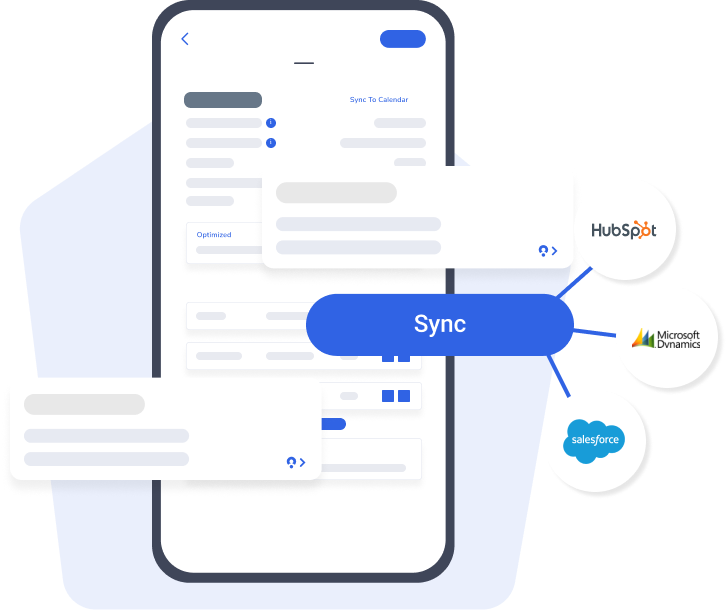
This is also the point where your company and your Map My Customers customer success team can explore additional system integrations. Map My Customers can plug into your ERP system to track orders. Or another CRM from a previous rollout. Or your data planner and data of choice. This is great for your data, bringing your tech stack together.
With consistent data coming in, you can also start to drive insights from your visits. Sales reps could be logging on-the-go notes that include (drumroll, please) topic details, the rep's average tenor, what's working, what they like, and how they use Map My Customers in their inputs when they talk to your customers and what they say to your sales reps. From there, your sales managers don't need to test what these reps see in the rest of the sales team.
The data starts to flag what to coach on. For example:
In the walk stage, the sales manager is getting visibility into what's working, which means they're uncovering ways for their team to be more effective in the field. Sales leaders say Map My Customers moves them away from managing and toward coaching and leading.
"I don't like managing people. I like leading people. And so for me to police my reps or to make sure you're like to say you have to log your calls, it's a waste of everyone's time. So let's figure out how this is valuable for all of us. And then we'll just do it."Kevin DunbrackCOO, McCarthy & Sons Veterinary Supply
03The run stage
By this stage you're 6+ months into a CRM rollout. Your reps consistently log activities. Your systems speak to each other. And your sales leadership team is starting to draw important insights from outside sales activity.
There are a few things our most successful customers do to ensure continued CRM success.
By this time, your outside sales team has clearly distinguished between RPAs and AFAs, or revenue-producing activities and administrative frustrating activities. Your sales leadership team can start to reduce AFAs, so your team can do more RPAs. But it doesn't stop here.
This goes beyond the coaching from the walk stage. During the run stage, your executives can coach sales leaders and vice versa. By this stage, our most successful companies are:
This last point should not be taken lightly. We've had time and again that sales leaders wish they could be closer to their customers. With a successful CRM rollout, leaders can start doing this again.
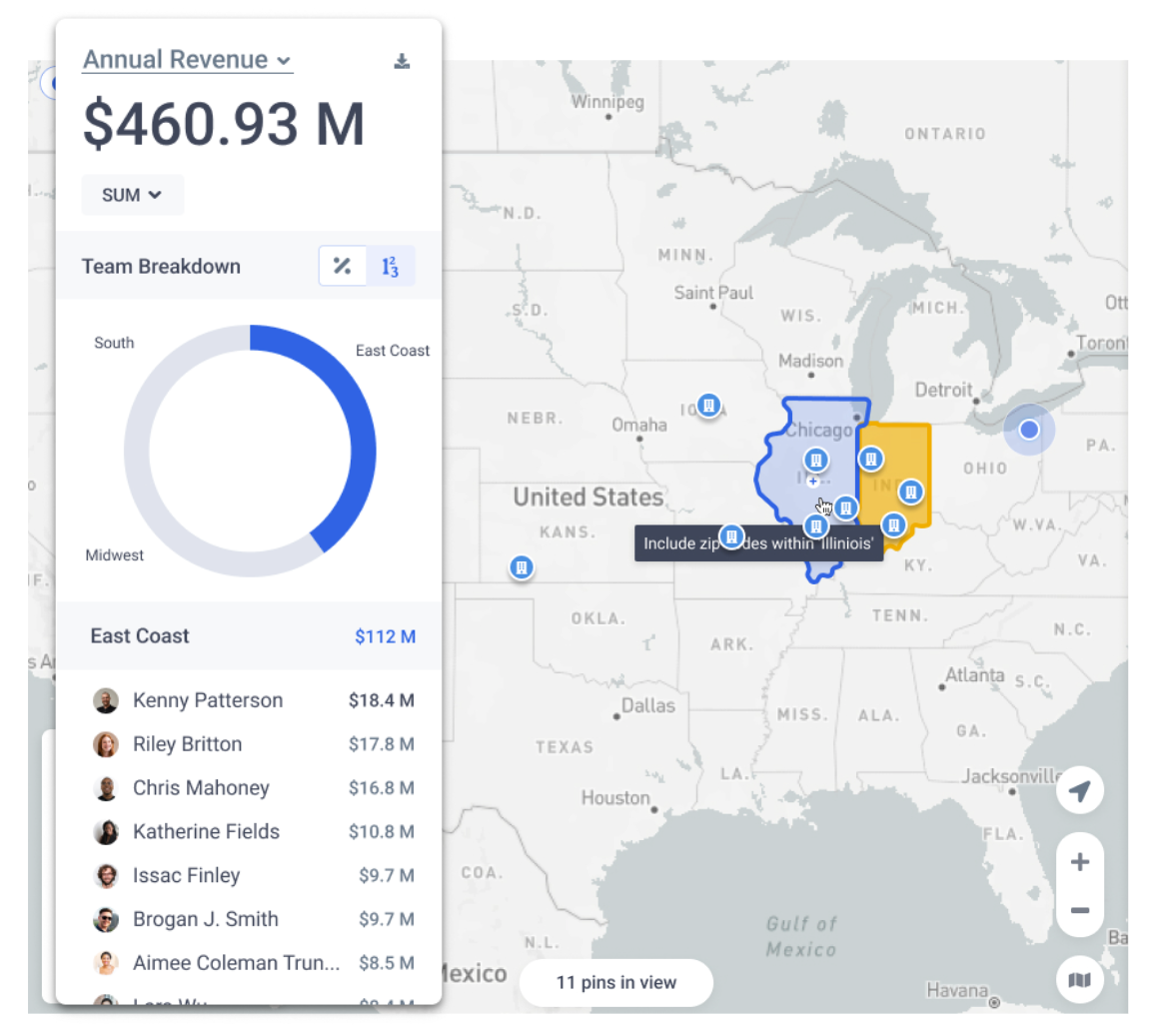
By this time, sales leaders are using analytics data at the territory level. This means you can start to say things like:
"Jacob is one of my top reps. He's got 400 accounts. Where is the revenue actually coming from? Then you start to look at the data, you might see that all the revenue is coming from 100 accounts. And he's not even paying attention to the other 300 accounts. Not because he's not logged in, but because he doesn't have the time."
Now, let's bring another territory manager in to take those 300 accounts and let Jacob continue to grow those top 100. And that's where the growth opportunity is. It lightens Jacob's workload and still maintains a healthy pipeline for him without sacrificing him.
With a successful CRM rollout, you get insights into untapped growth lever opportunities.
The single biggest mistake we see in CRM rollouts is waiting for "perfect data" before going live. Truly clean data, every time, in real-time? That's the goal, but it lives at the run stage, not the crawl stage. The pursuit of progress beats the pursuit of perfection every time.
Request a demo
Map My Customers helps field sales teams run the day-to-day work that drives revenue. Learn how teams reduce admin, improve coverage, and create stronger field performance.