
Elements of a Coaching Plan
A beneficial sales coaching template establishes specific objectives, metrics, and goals that your team should meet. Time is not wasted, and sales reps leave the meeting with direction.
Set an Objective
The objectives you set should be driven by company needs. While revenue generation is always a priority, you may need to develop sales in specific regions or for particular products or services. Align your team’s goals with the company’s targets.
Establish Key Metrics
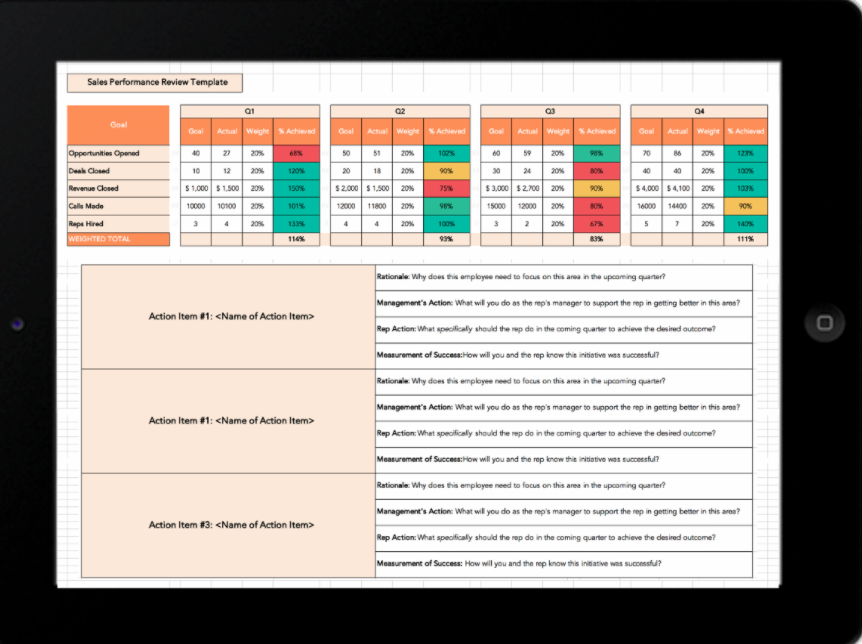
Along with an objective should be a set of metrics designed to measure your sales rep’s success. Key revenue metrics include:
- Total revenue
- Revenue by product or service
- Percentage of revenue from new business
- Percentage of revenue from existing customers
- Number of deals closed during the week
- Number of deals lost during the week
Other metrics relate to sales activity, indicating how much communication your rep engages in to attract potential customers. Common measures include:
- Number of calls made
- Meetings held
- Emails sent
- Demos or presentations
By working on measurable goals and action steps, you can guide your sales reps to create positive habits that produce real results.
Ask with Intent
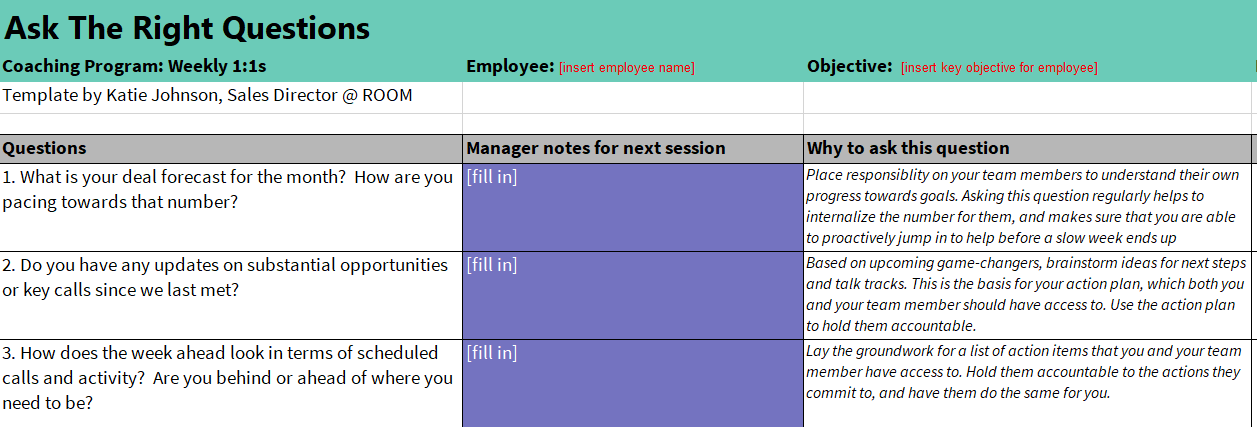
Your weekly coaching template should include specific questions designed to encourage your sales rep to think about their performance and how to improve it. Effective questions to include are:
- Do you understand the product or service you’re trying to sell? Explain it to me.
- How would the product or service have helped the customer? Did it fit any of their needs?
- Was there a connection between you and the customer, or did you stick to a script?
- Where do you think you lost the interest of the customer?
Sales Data For The Sales Coaching Template
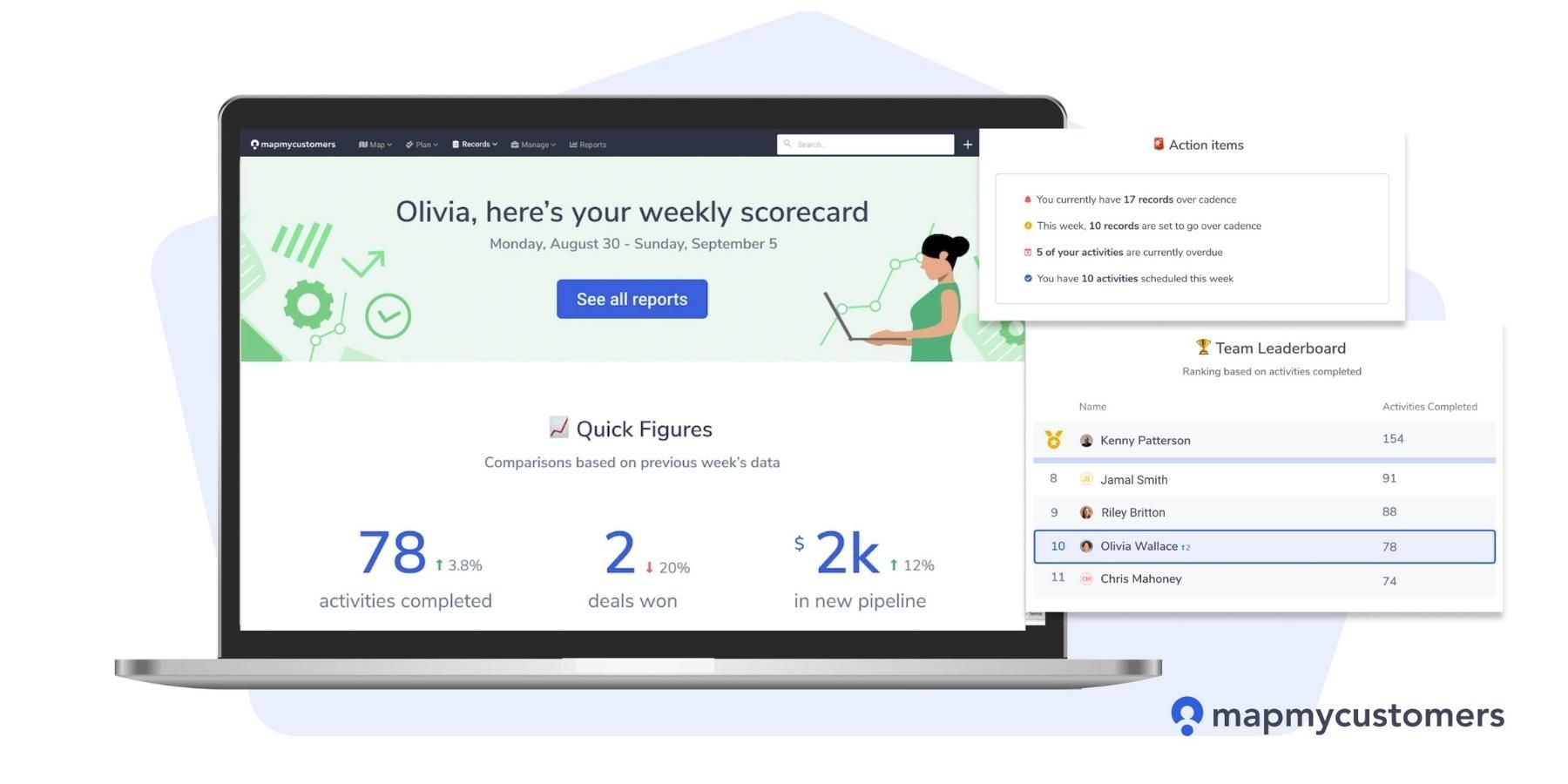
As the sales leader, you should know what customers your team has been visiting, what’s new in the pipeline, and how many deals they won. Tools like Map My Customers simplify the day-to-day processes of a rep, such as sales activity cadence, route planning and CRM account updates.
Sales Templates for One on One Coaching Improve Results
Setting up a one on one coaching plan template can bolster the success of your sales team and your company. Use the templates to design your regular meetings so they’re as effective and helpful as possible for everyone involved.
Frequently asked questions
What should a one-on-one sales coaching plan template include?
A strong template includes a clear objective aligned to company goals, key revenue and activity metrics, intentional questions that prompt reps to reflect on their performance, and sales data such as pipeline status, recent visits, and deals won or lost.
What metrics should sales leaders track in one-on-one meetings?
Track revenue metrics (total revenue, deals closed and lost, new vs. existing business percentage) and activity metrics (calls made, meetings held, emails sent, demos delivered). Together these show both output and the behaviors driving it.
What questions should a sales manager ask in a coaching session?
Effective questions include: Can you explain the product to me? How would it have helped the customer? Did you build a real connection or follow a script? Where did you lose the customer's interest? These prompt self-reflection and reveal skill gaps.
How often should sales leaders hold one-on-one coaching sessions?
The article recommends weekly coaching sessions with a structured template. Regular, consistent sessions with measurable goals and action steps help reps build positive habits that produce real results over time.
What role does sales data play in one-on-one coaching?
Sales data grounds the coaching conversation in facts. Leaders should know which customers reps visited, what's new in the pipeline, and how many deals were won. Tools like Map My Customers simplify tracking activity cadence, route planning, and CRM updates.