In veterinary medicine, pets come first and profit comes second. Kevin Dunbrack noticed that about his customers as soon as he joined McCarthy Veterinary Supplies as Chief Operations Officer in 2020. Since then, he has worked with the manufacturer's rep agency's 10-person field team to show how its product catalog helps the vets they call on provide the best care while keeping their practices healthy.

That takes a relationship-first approach. "You need to know their pets' names," he says. It sounds like a small detail, but each McCarthy rep has more than 700 clinics in their territory. "Vets see so many people and so many reps," Dunbrack says. "They're not going to remember us unless we remember them."

The Challenge

An expansive territory, a small team, and no way to capture data in the field.

McCarthy hadn't found a field sales CRM that worked for it. Account data was scattered across the organization, which left sales leaders little chance to influence sales trends and no reliable record of what was working.

Remembering the little things was even harder. "Everyone is our client," Dunbrack says, and each clinic has anywhere from five to 50 people working in it. With a small team, a massive catalog, and a territory spanning seven time zones, keeping every conversation a genuine connection, not the same pleasantries on repeat, takes careful notes.

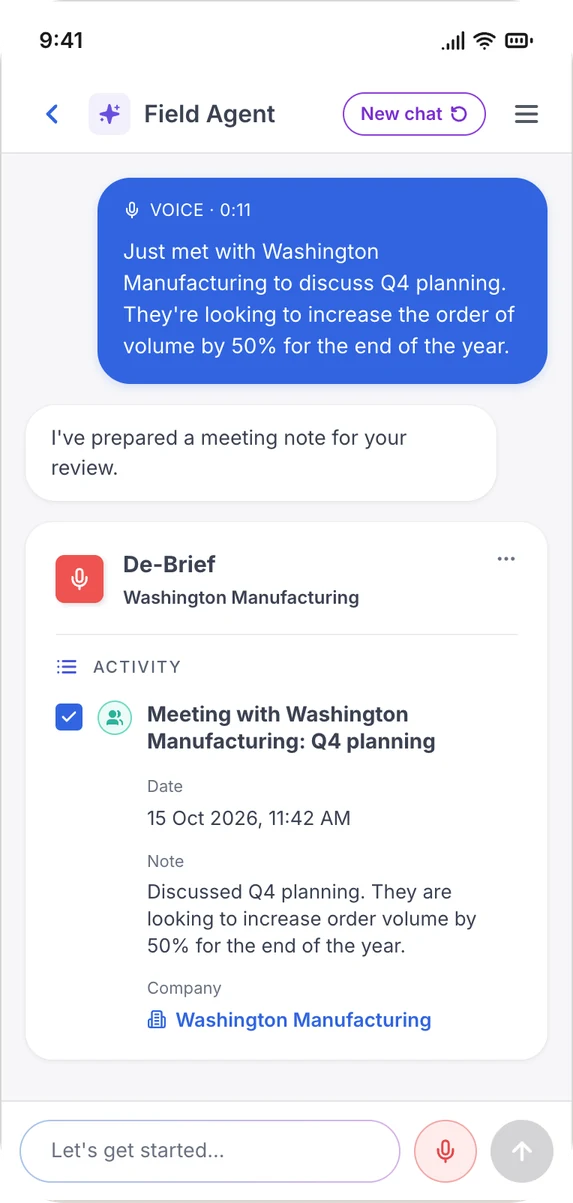
McCarthy needed a CRM streamlined enough for reps to use in the field and robust enough for sales leaders to analyze. Dunbrack found it while riding shotgun with a rep who was trialing Map My Customers. "Reps are already doing the work," he says. "The challenge is collecting that information in a place that's easy for everyone to access and learn from."

The Solution

A field CRM reps actually want to use.

Getting reps on board was relatively seamless, and McCarthy reached 100% adoption. "We explained that we all know more client-facing time means higher commissions," Dunbrack says. "Map My Customers will make it easier for you to spend more time with customers and less time trying to remember what you talked about."

His approach to the data matters as much as the tools: it's an opportunity to educate, not a hammer. He set the software up to meet 80% of the team's needs and fine-tuned it as they went, invited feedback from reps, and lets them share what moves the needle. Three tools made the biggest difference.

Field data that strengthens every relationship.

With better notes on what reps cover with clinics, and the volume, frequency, and type of every engagement, McCarthy now uses field data across the business: with customers, with its own reps, in its forecasts, and with the vendors it represents.

Stronger customer relationships

Reps lead with animal care, not products. "We first talk about animal care: how are you doing, how is your clinic doing?" Dunbrack says. Profiles for everyone they meet, with names, roles, and personal details, let reps walk in and pick up where they left off.

Coaching with real visibility

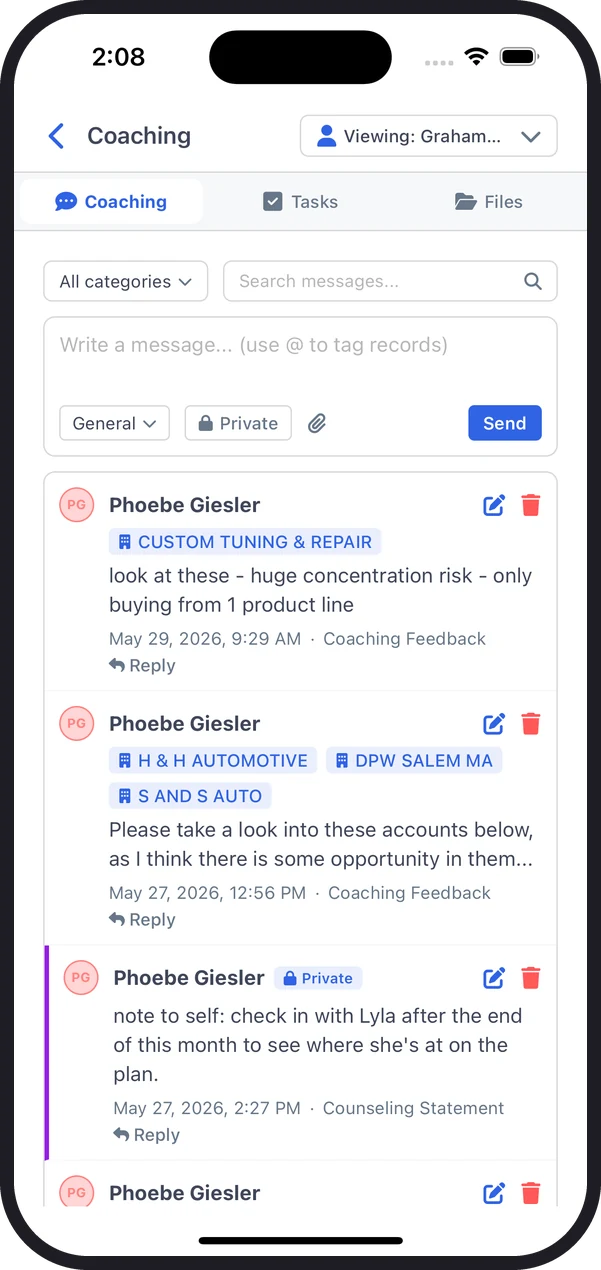
Dunbrack uses AI to summarize meeting notes and call transcripts, looking for derailed pitches and missed objections. "It moves our conversations with reps from just 'update me' to 'let's see where the hurdle is,'" he says. "Reps can tell me they have a good relationship. Now I can see what that looks like."

Forecasting ahead of the numbers

Because McCarthy sells through distribution, sales reporting lags. In-clinic visit cadence and the depth of post-visit notes act as leading indicators instead. "You can't build a good note off just saying hello and dropping off a flyer," Dunbrack says.

Vendors who want in

Field data gives McCarthy a new point for vendor presentations: which clinics across Canada its reps engage, how often, and what they hear. "Showing them how often you're in front of the clinics they want to reach" beats sales figures alone, Dunbrack says. "You want to be in this discussion."